2050 Sugarloaf Parkway, Lawrenceville, Georgia 30045

How to Read Your Cat’s Body Language: 9 Signals Most Owners Miss

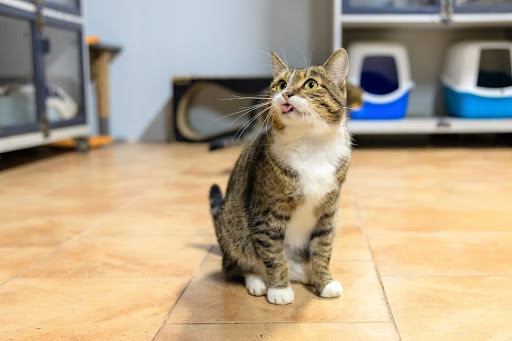
Cats communicate constantly, but they rarely rely on vocalizations alone. Tail position, ear movement, facial expressions, posture, grooming habits, and even the direction of their gaze can provide clues about how a cat feels. Learning these signals can help owners recognize comfort, fear, frustration, excitement, and potential health concerns.
At Dogwood Animal Hospital, understanding feline behavior is an important part of providing comprehensive veterinary care. When owners recognize their cat’s normal body language, they are often better prepared to notice subtle changes that could indicate stress, discomfort, or illness. The key is to interpret several signals together rather than relying on one movement in isolation.
Why Is Cat Body Language Important?
Cats are naturally subtle communicators. Unlike dogs, they may not always make obvious attempts to get attention when something is wrong. A change in posture or routine may be more meaningful than a dramatic vocalization.
Understanding body language can help you:
- Recognize when your cat feels relaxed
- Identify signs of fear or stress
- Avoid unwanted handling
- Improve interactions between cats and people
- Detect changes in normal behavior
- Recognize possible signs of discomfort
- Create a more comfortable home environment
The most important rule is to establish what is normal for your individual cat. A signal that is normal for one cat may mean something different for another.
9 Cat Body Language Signals Most Owners Miss
1. Slow Blinking
A cat that looks at you and slowly closes and opens its eyes may be relaxed and comfortable in your presence. Slow blinking is often associated with friendly social communication.
You can respond by slowly blinking back and then looking away. Avoid staring continuously, particularly if your cat is already nervous.
However, slow blinking should not be interpreted as proof that a cat is happy in every situation. Consider the entire body posture and environment.
2. Tail Position and Movement
A cat’s tail can provide useful information, but context matters.
A relaxed cat may carry its tail in a natural position, while a tail held upright can accompany friendly social interaction. A puffed-up tail can indicate fear, arousal, or an attempt to appear larger.
Rapid tail flicking or thumping may suggest irritation, overstimulation, or heightened attention. It does not necessarily mean the cat is happy.
Pay attention to what is happening immediately before the tail movement. If your cat begins thumping its tail while you pet a particular area, it may be telling you that the interaction has become uncomfortable.
3. Ear Position
Cats can move their ears independently, making ear position a useful indicator of attention and emotional state.
Forward-facing ears often occur when a cat is interested in something. Ears rotated sideways or backward may indicate uncertainty, irritation, or stress. Ears pressed tightly against the head can accompany significant fear or defensive behavior.
Ear position should always be interpreted alongside facial expression, body posture, tail movement, and the surrounding situation.
4. Pupil Changes
A cat’s pupils can change size in response to light, but they can also change with emotional arousal.
Large pupils may occur when a cat is excited, frightened, highly stimulated, or playing. Narrow pupils may occur under different circumstances, including bright light or certain emotional states.
Because lighting strongly affects pupil size, never use pupil changes alone to determine how a cat feels.
Sudden or persistent changes in pupil size, particularly when accompanied by vision problems, disorientation, pain, or other unusual symptoms, warrant veterinary attention.
5. Whisker Position
Whiskers do more than make cats look distinctive. They are highly sensitive structures that help cats gather information about their surroundings.
When relaxed, whiskers are generally positioned naturally to the sides of the face. During heightened interest, they may move forward. When a cat is frightened or uncomfortable, whiskers may be pulled backward or held differently.
Avoid trimming a cat’s whiskers. They serve important sensory functions and should be left intact.
6. The “Frozen” Posture
Some owners assume that a completely still cat is relaxed. However, freezing can also be a sign of fear or uncertainty.
A frightened cat may crouch low, tense its body, pull its limbs close, flatten its ears, or remain unusually still.
Look at the entire posture. A genuinely relaxed cat generally has loose muscles and a comfortable resting position. A tense, motionless cat may be attempting to avoid drawing attention to itself.
If your cat frequently freezes around certain people, animals, sounds, or situations, identify the trigger and give the cat an opportunity to retreat to a safe location.
7. Belly Exposure Does Not Always Mean “Pet Me”
When a cat rolls onto its back and exposes its belly, many people interpret this as an invitation for a belly rub.
That interpretation can be incorrect.
A cat may expose its belly while relaxed, but the position can also be defensive. A frightened or overstimulated cat may roll onto its back while preparing to use all four paws and claws if necessary.
Instead of immediately reaching toward the belly, observe the rest of the body. Loose muscles, relaxed ears, and a calm expression suggest comfort. Tension, flattened ears, dilated pupils, and defensive paw positioning suggest that the cat needs space.
8. Sudden Grooming During a Stressful Situation
Cats groom themselves for normal hygiene, but grooming can also appear during moments of uncertainty or emotional conflict.
For example, a cat may suddenly begin licking itself after encountering an unfamiliar person or another animal. This behavior can function as a displacement activity when the cat is unsure how to respond.
Occasional grooming is normal. Excessive grooming, bald patches, irritated skin, or persistent licking should be evaluated because allergies, parasites, pain, stress, and other medical conditions can contribute to over-grooming.
9. Changes in Sleeping and Hiding Behavior
A cat that suddenly spends more time hiding or sleeping than usual may be communicating that something has changed.
Cats naturally sleep for many hours each day, so sleep itself is not a reliable indicator of illness. The important factor is a change from your cat’s normal pattern.
A cat that suddenly stops participating in favorite activities, avoids family members, hides more often, or becomes less active may be experiencing stress, pain, or illness.
Do not assume that a cat is simply becoming more independent. Significant behavioral changes deserve attention.
How to Tell if Your Cat Is Relaxed
A comfortable cat generally displays several relaxed signals at once.
You may notice:
- A loose, natural body posture
- Ears in a neutral or forward position
- Normal, relaxed blinking
- A naturally positioned tail
- Comfortable grooming
- Normal appetite and activity
- Willingness to interact or calmly remain nearby
- Resting in open or familiar areas
A relaxed cat does not necessarily want constant physical contact. Allow your cat to choose how much interaction it wants.
How to Recognize Fear or Stress in Cats
Stress signals can be subtle. A cat experiencing fear may:
- Hide or attempt to escape
- Crouch low to the ground
- Flatten its ears
- Keep its body tense
- Hold its tail close to the body
- Dilate its pupils
- Vocalize differently
- Refuse food
- Groom excessively
- Become unusually aggressive
If you identify a stress trigger, give your cat space rather than forcing interaction.
Provide hiding places, elevated resting areas, predictable routines, and separate resources in multi-cat households.
What Does an Angry or Defensive Cat Look Like?
A defensive cat may display several obvious warning signals, including hissing, growling, swatting, arched posture, raised fur, flattened ears, and rapid tail movements.
These behaviors generally communicate that the cat wants distance.
Do not punish a cat for displaying warning signals. Punishment can increase fear and may remove the warning behavior without resolving the underlying discomfort.
Instead, safely increase distance and identify what triggered the response.
Can Body Language Indicate Pain?
Yes. Cats may display behavioral changes when they are experiencing pain, but the signs can be difficult to recognize.
Possible indicators include:
- Hiding more than usual
- Reduced grooming
- Reluctance to jump
- Difficulty climbing stairs
- Changes in appetite
- Restlessness
- Unusual vocalization
- Irritability
- Changes in litter box behavior
- Sleeping in unusual positions
- Resistance to being touched
Cats often instinctively conceal weakness, so subtle changes may be meaningful.
If your cat’s behavior changes unexpectedly or you suspect discomfort, a veterinary examination can help determine whether a medical issue is contributing to the behavior.
How Can You Communicate Better With Your Cat?
Good feline communication begins with respecting boundaries.
Avoid forcing physical contact when your cat is displaying signs of discomfort. Instead, allow the cat to approach you. Use slow movements and a calm voice, and reward friendly interactions.
Environmental choices also matter. Cats benefit from safe hiding spaces, elevated areas, scratching surfaces, appropriate litter boxes, and opportunities for play.
In homes with multiple cats, provide enough food, water, resting areas, litter boxes, and escape routes to reduce competition.
When Should You Contact a Veterinarian?
A change in body language does not always indicate a medical problem, but sudden or persistent changes should not be ignored.
Contact a veterinarian if your cat develops:
- Sudden aggression or withdrawal
- Significant appetite changes
- Difficulty walking or jumping
- Persistent hiding
- Changes in litter box habits
- Excessive grooming
- Unusual vocalization
- Signs of pain
- Sudden changes in activity
- Changes in breathing
- Repeated vomiting or diarrhea
Behavioral changes can sometimes be caused by illness or pain. A veterinary evaluation can help distinguish medical concerns from environmental or behavioral issues.
Building a Stronger Relationship Through Better Communication
Understanding feline body language can make everyday interactions more rewarding. Instead of expecting cats to communicate in obvious ways, owners can learn to recognize small changes in posture, movement, facial expression, and routine.
The most useful approach is to look at the whole cat. Tail position alone does not tell the complete story. Combine it with the ears, eyes, whiskers, posture, vocalizations, environment, and recent behavior.
Most importantly, compare what you see today with what is normal for your cat. That baseline can help you recognize meaningful changes early.
Cat body language is a subtle but valuable form of communication. Slow blinking, tail movements, ear position, pupil changes, whisker placement, posture, grooming, belly exposure, and changes in hiding or sleeping habits can all provide clues about how a cat feels. Understanding these signals can help owners respond appropriately, reduce stress, and recognize potential health concerns.
For pet owners in Lawrenceville & Grayson, GA, knowing your cat’s normal behavior can make it easier to identify changes that deserve professional attention. Schedule your appointment with Dogwood Animal Hospital if you notice persistent behavioral changes or need guidance about your cat’s physical or emotional well-being.
FAQs:
Q1. How can I tell if my cat is happy?
Ans: A relaxed cat may have a loose body posture, naturally positioned ears and tail, relaxed facial muscles, normal grooming, and a willingness to interact or rest comfortably nearby. Look for several relaxed signals together rather than relying on one behavior.
Q2. Why does my cat stare at me and slowly blink?
Ans: Slow blinking can occur during friendly, relaxed interactions. You can respond with a slow blink of your own and then look away. However, always consider your cat’s overall body language and surroundings.
Q3. Why does my cat’s tail move back and forth?
Ans: Tail movement can have different meanings depending on speed and context. Rapid flicking or thumping may indicate irritation, overstimulation, or heightened attention. A relaxed tail position generally provides a different signal.
Q4. Why is my cat suddenly hiding more than usual?
Ans: Increased hiding can occur because of stress, environmental changes, fear, pain, or illness. If hiding is sudden, persistent, or accompanied by changes in appetite, activity, grooming, or litter box behavior, contact a veterinarian.
Q5. Does a cat showing its belly mean it wants a belly rub?
Ans: Not necessarily. Some cats expose their bellies when relaxed, but others may do so defensively. Look at the ears, eyes, muscle tension, paws, and overall posture before attempting to touch the cat.
Q6. Can changes in cat body language mean my cat is sick?
Ans: Yes. Cats may respond to pain or illness by hiding, reducing grooming, changing their activity level, becoming irritable, or altering eating and litter box habits. Sudden or persistent behavioral changes should be evaluated by a veterinarian.